
If you are trying to build a healthier movement routine, you may have asked yourself the same question many beginners ask: should I do yoga or Pilates?
At first glance, yoga and Pilates can look similar. Both are low-impact. Both can be done on a mat. Both focus on controlled movement, breathing, body awareness, and consistency. But once you try them, the difference becomes much clearer.
Yoga often feels more connected to flexibility, breath, relaxation, and mental calm. Pilates usually feels more focused on core strength, posture, stability, and precise full-body control.
So which one is better?
The honest answer is: it depends on your goals. If you want to become more flexible and relaxed, yoga may be the better place to start. If you want to build core strength, improve posture, and train with more structure, Pilates may be a better fit. For many people, the best routine includes both.
In this guide, we’ll compare yoga and Pilates by strength, flexibility, balance, stress relief, beginner-friendliness, and home workout potential.
Practical Note: What Beginners Usually Ask First
From a home workout perspective, most beginners are not only trying to decide between yoga and Pilates as exercise styles. They are usually trying to solve a more practical problem: “Which one will I actually keep doing?”
Some people want to feel less stiff after sitting all day. Some want a low-impact way to build strength. Others want a routine that feels calming but still productive. This is why the best choice often depends less on which practice is “better” and more on which one matches your body, your space, and your motivation.
If you enjoy quiet stretching, breathwork, and a slower mental reset, yoga may feel more natural. If you prefer structure, resistance, and controlled progress, Pilates may feel easier to stay consistent with.
What Is the Main Difference Between Yoga and Pilates?
The simplest way to understand the difference is this: yoga is often centered around breath, flexibility, balance, and relaxation. Pilates is often centered around core strength, posture, stability, and controlled movement.
Yoga usually includes poses, breathing techniques, and sometimes meditation. Depending on the style, a yoga class can feel gentle and restorative, or it can be active and physically challenging.
Pilates is usually more structured around specific movements. It often targets the core, hips, glutes, back, shoulders, and stabilizing muscles. Instead of holding poses for a long time, Pilates usually asks you to move with control, precision, and steady resistance.
Both can support a stronger mind-body connection. The difference is that yoga often approaches that connection through breath and stillness, while Pilates often builds it through controlled movement and muscle awareness.
Yoga vs Pilates: Quick Comparison
| Category | Yoga | Pilates |
|---|---|---|
| Main focus | Flexibility, breath, balance, relaxation | Core strength, posture, control, stability |
| Movement style | Holding poses or flowing through sequences | Controlled, repeated movements |
| Mental focus | Stronger focus on breathing and relaxation | Strong focus on concentration and body control |
| Strength training | Depends on the style of yoga | Usually more strength-focused |
| Flexibility | Often a primary focus | Supports flexibility, but with more strength control |
| Equipment | Mat, blocks, straps, bolsters | Mat, reformer, tower, chair, barrel, resistance equipment |
| Best for | Flexibility, stress relief, mobility, recovery | Core strength, posture, full-body control, home training |
Is Yoga or Pilates Better for Strength?
If your main goal is strength, Pilates is usually the more direct choice.
Pilates focuses heavily on the core, but it is not just an ab workout. A good Pilates routine can train your back, glutes, hips, legs, shoulders, and smaller stabilizing muscles. Many movements ask you to keep your body aligned while moving your arms or legs with control. This makes Pilates especially useful for people who want to build functional strength without high-impact workouts.
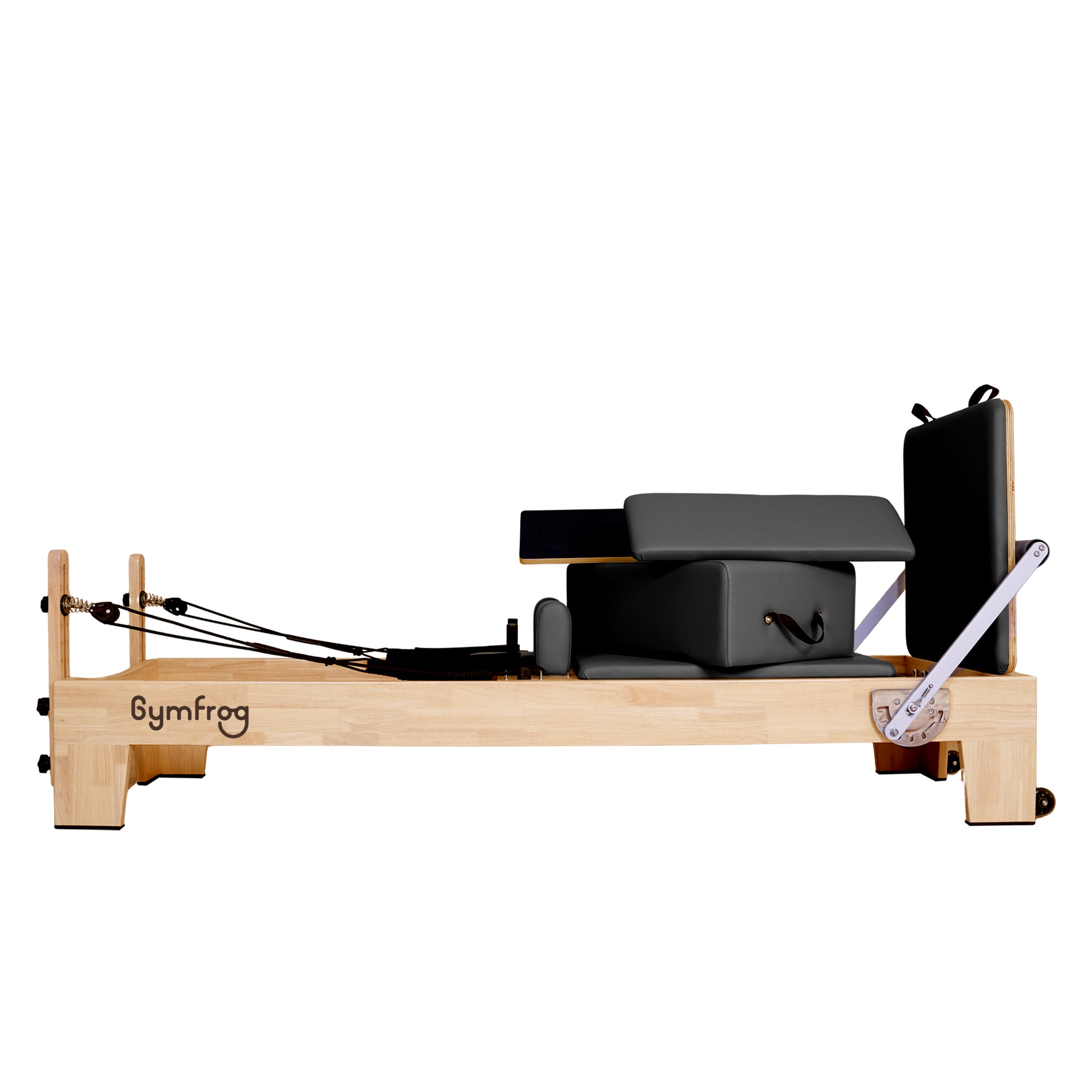
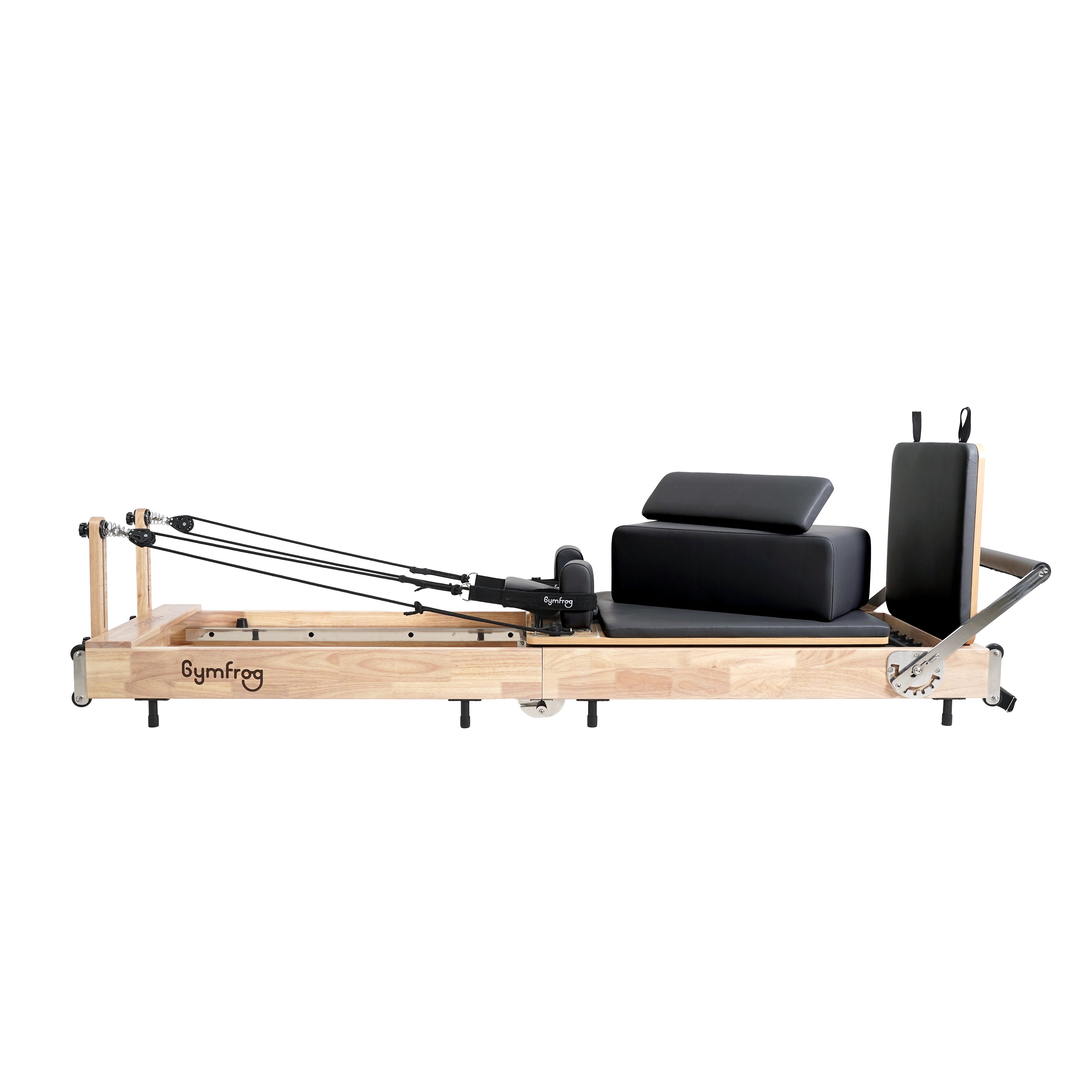
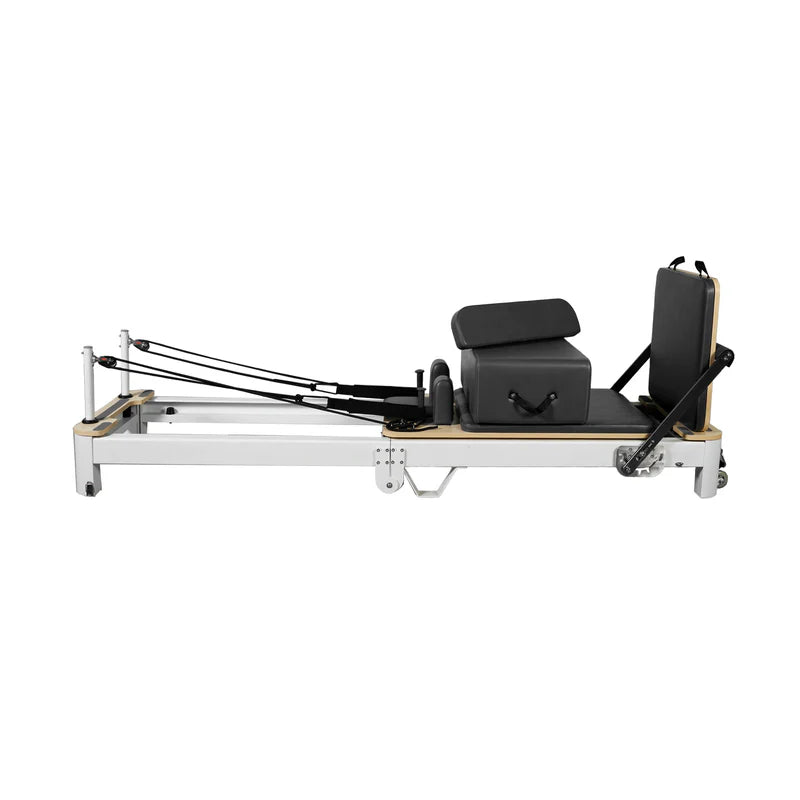
Reformer Pilates adds another layer of challenge. A Pilates reformer for home workouts uses spring resistance, a moving carriage, a footbar, and adjustable positions to make exercises more supportive or more difficult. This allows you to train strength, coordination, and stability in a more progressive way than mat work alone.
That does not mean yoga cannot build strength. Styles like vinyasa, power yoga, and ashtanga yoga can be physically demanding. Holding poses such as plank, chair pose, warrior poses, or arm balances can challenge your muscles. But in general, Pilates is more specifically designed around strength, control, and muscular balance.
If your goal is to feel stronger through your core, improve body control, and build a more structured home workout routine, Pilates may be the better fit.
What We’ve Noticed About Strength Training
In practice, many beginners feel that Pilates gives them a clearer sense of strength progress. The movements are usually more structured, and it is easier to notice when your core, hips, glutes, or back muscles are working.
This is especially true with reformer Pilates. The spring resistance gives the body feedback during each movement. Instead of simply moving through space, you are working against resistance, controlling the carriage, and learning how to stay stable while your arms or legs move.
That guided resistance is one reason reformer Pilates can feel more approachable for people who want low-impact strength training at home.
Is Yoga or Pilates Better for Flexibility?
If your main goal is flexibility, yoga is often the more direct choice.
Many yoga practices include stretching, longer holds, breath-focused movement, and gradual mobility work. This can be helpful if you feel stiff, tight, or restricted after sitting for long hours, lifting weights, running, or simply not moving enough during the day.
However, feeling stiff in your first yoga class does not mean yoga is not for you. In fact, many beginners feel stiff at first. Flexibility is not a requirement for yoga; it is often one of the reasons people start.
Pilates can also support flexibility, but it usually approaches it differently. Instead of only stretching a muscle, Pilates often teaches you to control your movement through a larger range of motion. That means you are not just becoming more flexible — you are also learning how to stay stable and supported while you move.
A good way to think about it is: yoga may help you open and release. Pilates may help you strengthen and control.
For many people, combining both is ideal. Yoga can help with flexibility and relaxation, while Pilates can help build the strength and stability needed to move better.
A Note for People Who Feel Stiff
If you feel stiff in your first yoga class, that does not mean yoga is wrong for you. It usually means your body is learning a new type of movement.
Many beginners think they need to be flexible before starting yoga, but flexibility is often the result of practice, not a requirement. A gentle yoga routine can be a good way to improve mobility, slow down, and release tension.
However, if you feel frustrated by long holds or deep stretches, Pilates may be a better starting point. Pilates can help you build strength and control within your current range of motion. Over time, that stability may make stretching and mobility work feel more comfortable.
Is Yoga or Pilates Better for Stress Relief?
Yoga is often the more obvious choice for stress relief because it usually includes breathing, slower movement, and relaxation. Many people use yoga as a way to calm the mind, reconnect with the body, and release tension.
Gentle yoga, restorative yoga, and slow flow classes can be especially helpful for people who want a softer practice. If you want your workout to feel like a mental reset, yoga may be a better starting point.
That said, Pilates can also feel mentally calming. Because Pilates requires focus, control, and precision, it can pull your attention away from daily stress and into the present moment. Some people actually find Pilates easier to focus on than yoga because the movements feel more structured.
So the better choice depends on your personality.
Choose yoga if you want stillness, breathwork, and relaxation.
Choose Pilates if you prefer active focus, controlled movement, and a more strength-based mind-body workout.
Is Yoga or Pilates Better for Posture?
Both yoga and Pilates can support better posture, but Pilates is often more directly associated with posture and alignment.
Pilates trains the muscles that help support your spine, pelvis, shoulders, and core. Many exercises require you to notice how your body is positioned and how your movement changes when your alignment improves.
This can be especially useful for people who spend long hours sitting at a desk, working from home, driving, or looking down at a phone. Pilates encourages you to build awareness of your body position and strengthen the muscles that help you stay upright and stable.
Yoga can also support posture by improving mobility, balance, and body awareness. But if your main goal is to strengthen the muscles that support posture, Pilates may feel more targeted.
Is Yoga or Pilates Better for Beginners?
Both yoga and Pilates can be beginner-friendly, but the better choice depends on what kind of movement you enjoy.
Choose yoga if you want:
- A slower introduction to movement
- More stretching and flexibility work
- A stronger focus on breathing and relaxation
- A gentle recovery routine
- A practice that requires very little equipment
Choose Pilates if you want:
- A more structured workout
- More core strength
- Better posture and body control
- Low-impact strength training
- A routine that can grow with your ability level
If you are a beginner and feel intimidated by yoga because you are not flexible, Pilates may feel more approachable. If you feel intimidated by Pilates because it looks too precise, a beginner mat class or beginner reformer routine can help you start slowly.
The most important thing is not choosing the “perfect” practice. It is choosing one you can do consistently.
Mat Pilates vs Reformer Pilates: What Is the Difference?
Mat Pilates is usually the easiest way to start. You only need a mat, and many exercises use your body weight for resistance. It is simple, accessible, and great for learning basic Pilates principles.
Reformer Pilates uses a specialized machine called a Pilates reformer. The reformer includes a sliding carriage, springs, ropes, pulleys, and a footbar. This setup adds resistance, support, and exercise variety.
A reformer can make some movements more challenging and others more accessible. For example, spring resistance can help support your movement while still strengthening your muscles. The moving carriage also encourages control, balance, and coordination.
For home users, a Pilates reformer can turn a simple workout corner into a more complete training space. It is especially useful if you want a consistent routine that goes beyond mat exercises.
If space is limited, a foldable Pilates reformer can be a practical option for home workouts. It gives you the benefits of reformer training while making storage easier when the machine is not in use.
Why Reformer Pilates Feels Different from Mat Work
Mat Pilates is simple and accessible, but reformer Pilates creates a very different training experience.
On a reformer, the moving carriage, springs, ropes, and footbar help create resistance and support at the same time. This can make some exercises more challenging and others more controlled. For home users, that balance is important because it allows the workout to feel both guided and progressive.
One thing many home users underestimate is how much consistency depends on setup. If your equipment is difficult to prepare, move, or store, it becomes easier to skip workouts. This is why foldable reformers can be helpful for people who want the benefits of reformer Pilates without turning an entire room into a permanent studio.
Can You Do Yoga and Pilates Together?
Yes. In fact, yoga and Pilates can work very well together.
You do not have to choose one and completely ignore the other. Many people use Pilates for strength and posture, then use yoga for flexibility, recovery, and relaxation.
A balanced weekly routine might look like this:
| Goal | Weekly Routine |
|---|---|
| Beginner balance | 2 days Pilates + 1 day yoga |
| Flexibility focus | 2 days yoga + 1 day Pilates |
| Strength focus | 3 days Pilates + 1 gentle yoga session |
| Stress relief | 2 days yoga + 1 light Pilates session |
| Home studio routine | 2–3 reformer Pilates sessions + yoga stretching on recovery days |
The best routine is the one that fits your body, schedule, and goals.
If you enjoy slow, mindful stretching, yoga may become your recovery practice. If you enjoy controlled resistance and structured strength work, Pilates may become your main training method.
Yoga or Pilates for Home Workouts?
Both yoga and Pilates are good for home workouts, but they create different home training experiences.
Yoga is simple to start at home because you need very little equipment. A mat, a quiet space, and a beginner-friendly class are enough for most people.
Pilates can also start with just a mat. But if you want more variety, resistance, and support, a reformer can make your home routine feel more complete. Reformer Pilates is especially helpful for people who want a low-impact workout that still feels strong, focused, and progressive.
For a simple home setup, many people combine:
- A yoga mat for stretching and recovery
- A home Pilates reformer for core strength and resistance training
- Small accessories for mobility, balance, and support
This combination can help you build a routine that supports both strength and flexibility.
From a Home Training Perspective
For home workouts, the best routine is often the one that removes the most friction.
Yoga is easy to start because you only need a mat and a quiet space. Pilates can also start with a mat, but a reformer adds more variety and resistance for people who want a stronger, more complete routine at home.
A practical setup might include a yoga mat for stretching and recovery, plus a Pilates reformer for strength-focused sessions. This gives you a balanced routine: yoga for flexibility and relaxation, Pilates for core strength, posture, and controlled full-body movement.
If your goal is to build a summer wellness routine you can actually maintain, think less about choosing one practice forever and more about building a space that makes movement easier to repeat.
So, Which Is Better: Yoga or Pilates?
Yoga is better if your main goals are flexibility, relaxation, breathwork, and stress relief.
Pilates is better if your main goals are core strength, posture, stability, and controlled full-body movement.
But the best answer for many people is both.
Yoga and Pilates are not enemies. They complement each other. Yoga can help you slow down, stretch, breathe, and recover. Pilates can help you strengthen, stabilize, and move with better control.
If you are building a summer wellness routine, you do not need to choose one forever. Start with the practice that matches your current goal. Then, as your body changes, you can combine both for a more balanced routine.
Build Your Summer Movement Routine at Home
International Yoga Day is a great reminder to move with more awareness, balance, and intention. Whether you prefer yoga, Pilates, or a combination of both, the goal is the same: to create a routine that helps you feel stronger, more flexible, and more connected to your body.
If you want to make Pilates a consistent part of your home routine, Gymfrog offers Pilates reformers and Pilates equipment for home and studio designed for controlled movement, core strength, and everyday practice.
Explore Gymfrog Pilates equipment and build a home training space that supports your summer wellness goals.
FAQ
Is yoga or Pilates better for beginners?
Both can be beginner-friendly. Yoga may feel better if you want relaxation, stretching, and breathwork. Pilates may feel better if you want structure, core strength, and controlled movement.
Is Pilates better than yoga for strength?
Pilates is usually more strength-focused, especially for the core, posture, and full-body control. Some yoga styles also build strength, but Pilates is generally more direct for this goal.
Is yoga better than Pilates for flexibility?
Yoga usually places more emphasis on stretching, mobility, and breath-based movement. Pilates can also support flexibility, but its main focus is controlled strength and stability.
Can I do yoga and Pilates together?
Yes. Many people use Pilates for strength and posture, and yoga for flexibility, relaxation, and recovery. The two practices can complement each other very well.
Should I choose mat Pilates or reformer Pilates?
Mat Pilates is simple and accessible. Reformer Pilates adds spring resistance, a moving carriage, and adjustable support, making it a good option for people who want more exercise variety and a more complete home Pilates setup.
Is Pilates good if I am not flexible?
Yes. You do not need to be flexible to start Pilates. Pilates can help you build strength and control through your available range of motion. Over time, it may also support better mobility and body awareness.
Is yoga good if I feel stiff?
Yes. Feeling stiff is common for beginners. You can start with gentle or beginner-friendly yoga classes and use props when needed. Flexibility usually improves gradually with consistent practice.
Editorial Note
This guide was created by the Gymfrog team to help home users better understand the difference between yoga, mat Pilates, and reformer Pilates. It combines common beginner questions, product-use insights, and practical home workout considerations to help readers choose a routine that fits their goals, space, and lifestyle.

Leave a comment
This site is protected by hCaptcha and the hCaptcha Privacy Policy and Terms of Service apply.