
The Engineering Behind a Smoother Folding Experience
For many people, choosing a foldable Pilates reformer is about more than saving space. A home Pilates reformer should be easy to use, convenient to store, and practical enough to fit naturally into everyday life.
One of the key innovations that can improve the folding experience is a gas spring with hydraulic damping.
By integrating this mechanical assistance system into the folding structure, a professional-grade Pilates reformer can become easier to lift, smoother to fold, and more suitable for home environments.
What Is a Gas Spring with Hydraulic Damping?
A gas spring with hydraulic damping is a sealed, self-contained support component designed to provide both lifting assistance and controlled movement.
It is commonly used in applications where heavy panels, doors, lids, or frames need to be opened, supported, and closed smoothly. Examples include automotive tailgates, furniture, medical equipment, fitness equipment, and industrial machinery.
Unlike a traditional mechanical spring, a gas spring uses compressed nitrogen inside a cylinder to generate a continuous support force. Internal hydraulic oil provides damping, helping regulate the movement of the piston and control the speed at which the component extends or compresses.
This combination allows the component to perform two important functions:
- Compressed nitrogen provides force assistance.
- Hydraulic damping helps control movement speed.
It should not be confused with a heavy-duty hydraulic cylinder used in industrial machinery. A gas spring with hydraulic damping is a compact, maintenance-free support component that does not require an external hydraulic pump or fluid circuit.
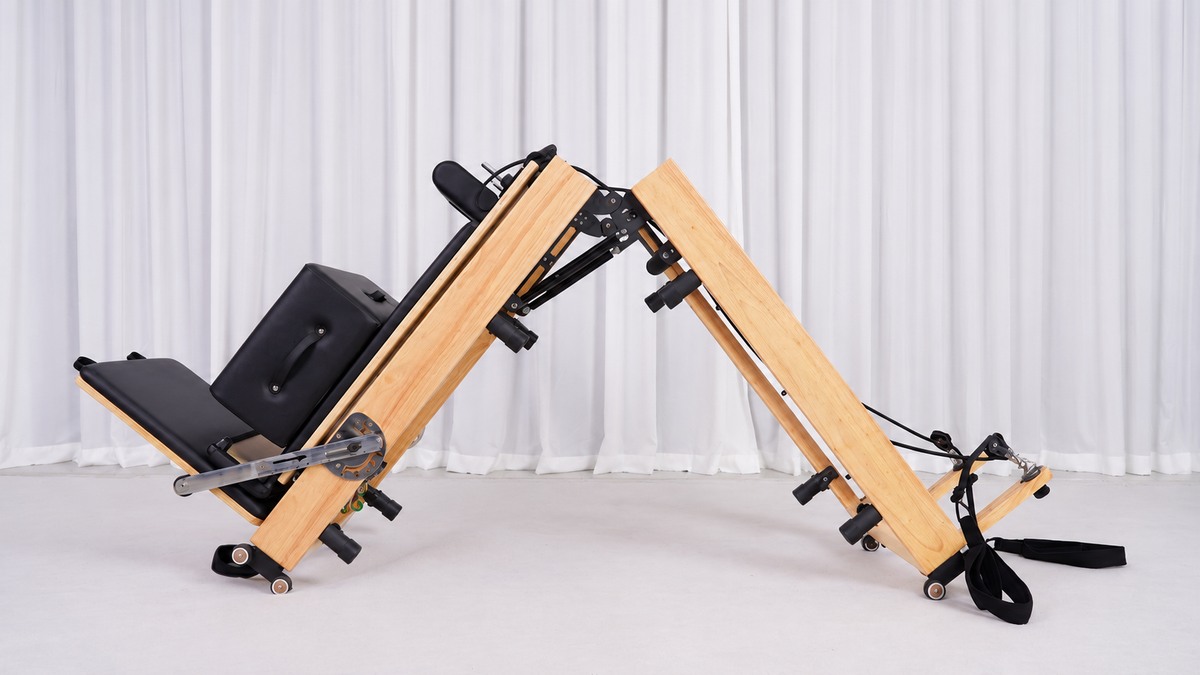
In a foldable Pilates reformer, the gas spring works together with the folding frame, pivot points, and linkage system to improve the overall folding experience.
At the beginning of the folding movement, it provides assistance that helps reduce the initial lifting effort.
As the frame moves, it helps compensate for changes in weight distribution and supports a more stable motion.
During unfolding, the hydraulic damping function helps moderate the downward movement of the frame, reducing the likelihood of sudden or uncontrolled motion.
A gas spring with hydraulic damping therefore does more than simply support weight. It is part of a carefully engineered folding mechanism designed to make the movement lighter, smoother, and easier to control.
How Does a Gas Spring with Hydraulic Damping Help a Foldable Pilates Reformer Fold More Easily?
1. Force Assistance and Weight Compensation
A gas spring contains high-pressure nitrogen, which generates force as the piston rod moves within the cylinder.
In this type of folding mechanism, the gas spring is positioned so that its stored force can assist the user when the reformer frame begins to move from the training position toward the folded position.
Instead of requiring the user to lift the full effective weight of the frame, the gas spring provides additional force through the reformer’s linkage system. This reduces the amount of physical effort required to initiate and continue the folding movement.
The actual level of assistance depends on several engineering factors, including:
- Gas spring force rating
- Gas spring stroke length
- Installation angle and mounting position
- Pivot point placement
- Linkage geometry
- Reformer frame weight
- Overall weight distribution
Through careful mechanical calculation and testing, a well-designed folding system can significantly reduce the force required from the user, making a substantial Pilates reformer easier to fold and store.
2. Dynamic Torque Balance During Folding
The force required to fold a Pilates reformer does not remain constant throughout the movement.
When the frame begins moving from a horizontal position, users typically experience greater resistance because they are working against both the weight of the reformer and the leverage created by gravity.
As the frame moves upward, its center of gravity changes relative to the folding pivot. This continuously changes the amount of torque applied to the mechanism.
A professionally designed folding system uses pivot points and linkage geometry to coordinate the assistance provided by the gas spring with hydraulic damping.
During the initial folding stage, the gas spring helps reduce starting resistance. As the reformer approaches the upright storage position, the influence of gravity changes, and the linkage system helps keep the movement balanced and controlled.
This dynamic balance creates a more natural folding experience, rather than requiring the user to manage the full effective weight of the equipment throughout the entire movement.
3. Controlled Movement and Safer Folding
In addition to providing force assistance, hydraulic damping helps control the speed of movement.
During unfolding, gravity naturally pulls the reformer frame downward. Without sufficient control, the frame may move too quickly or become more difficult for the user to manage.
The hydraulic oil inside the gas spring creates resistance as the piston moves. This damping effect helps slow the movement and makes the frame easier to guide toward the training position.
During the final stage of folding or unfolding, controlled motion can also help reduce impact between structural components. This supports smoother operation and may help reduce unnecessary stress on the folding mechanism.
For home users, this means folding and storing the reformer can become a more manageable part of their daily routine rather than a demanding physical task.
Why a Gas Spring with Hydraulic Damping Makes a Foldable Pilates Reformer More Practical for Home Use
Foldable Pilates Reformers Without Mechanical Assistance
Without a mechanical assistance system, folding a Pilates reformer may require the user to:
- Bend down and manually lift a substantial frame
- Apply considerable upper-body and core strength
- Support and control the equipment throughout the movement
- Prevent the frame from lowering too quickly
- Repeat the same physically demanding process each time the reformer is stored
For many home users, particularly those with limited space who need to fold the equipment regularly, this can become a barrier to consistent use.
A reformer may technically be foldable, but if folding it requires excessive effort, the space-saving design becomes less practical in everyday life.
Foldable Pilates Reformers with Gas Spring Assistance
A properly engineered gas spring-assisted folding mechanism provides several practical benefits.
Easier Everyday Storage
The gas spring helps reduce the effort needed to initiate and guide the folding movement, making it easier to store the reformer after a workout.
Smoother Folding Motion
The gas spring with hydraulic damping helps regulate movement throughout the folding and unfolding process, creating a smoother and more controlled experience.
More Manageable Unfolding
Hydraulic damping helps moderate the downward movement of the reformer frame, allowing the user to guide it more steadily into the training position.
Better Suitability for Small Spaces
A space-saving Pilates reformer allows users to enjoy professional-style training while keeping their living area flexible. When the folding process is easier, the reformer can be stored more regularly without turning storage into an additional workout.

GymFrog Foldable Pilates Reformer: Designed for Easier Home Training
The purpose of a foldable Pilates reformer is not only to reduce its storage footprint. It should also make Pilates easier to integrate into everyday life.
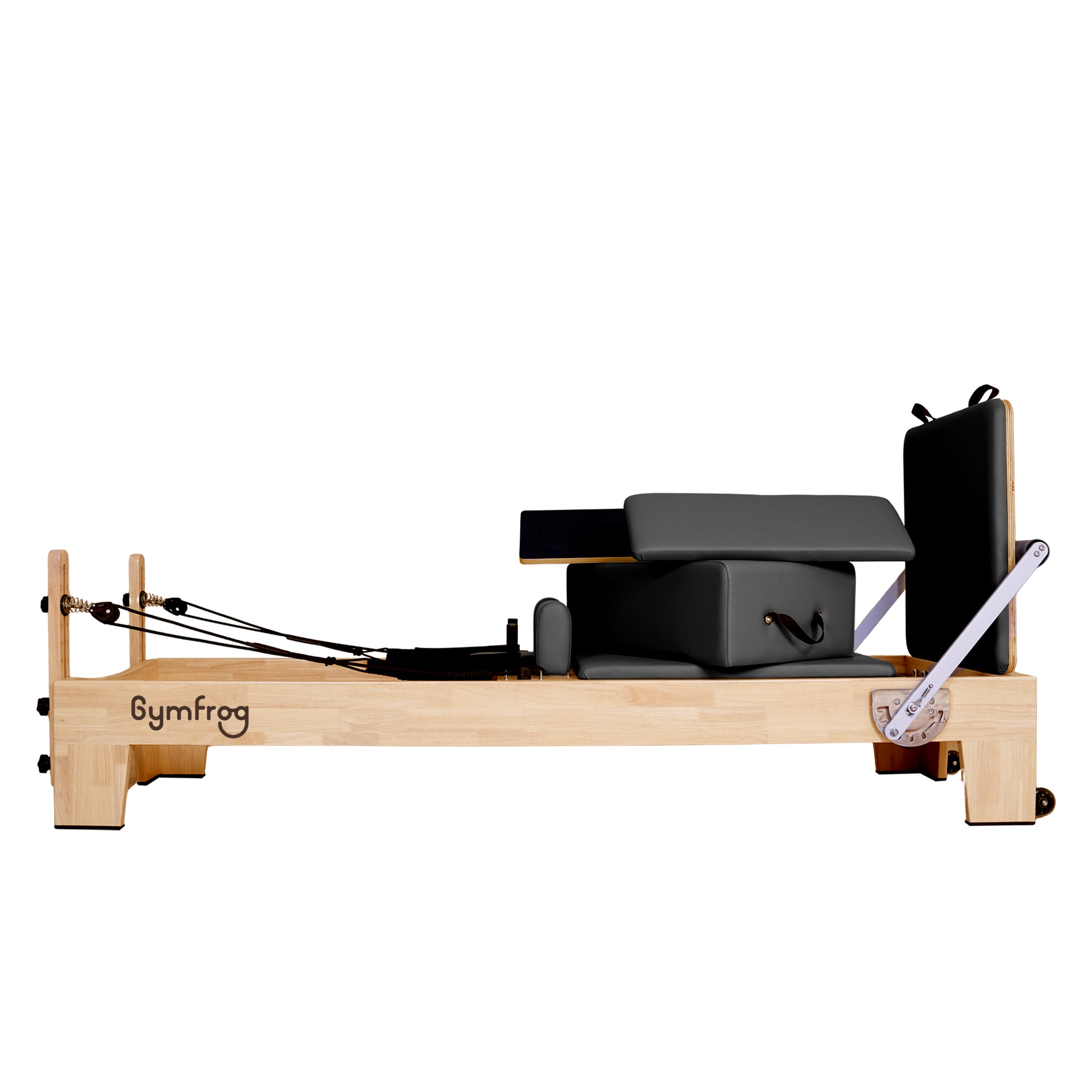
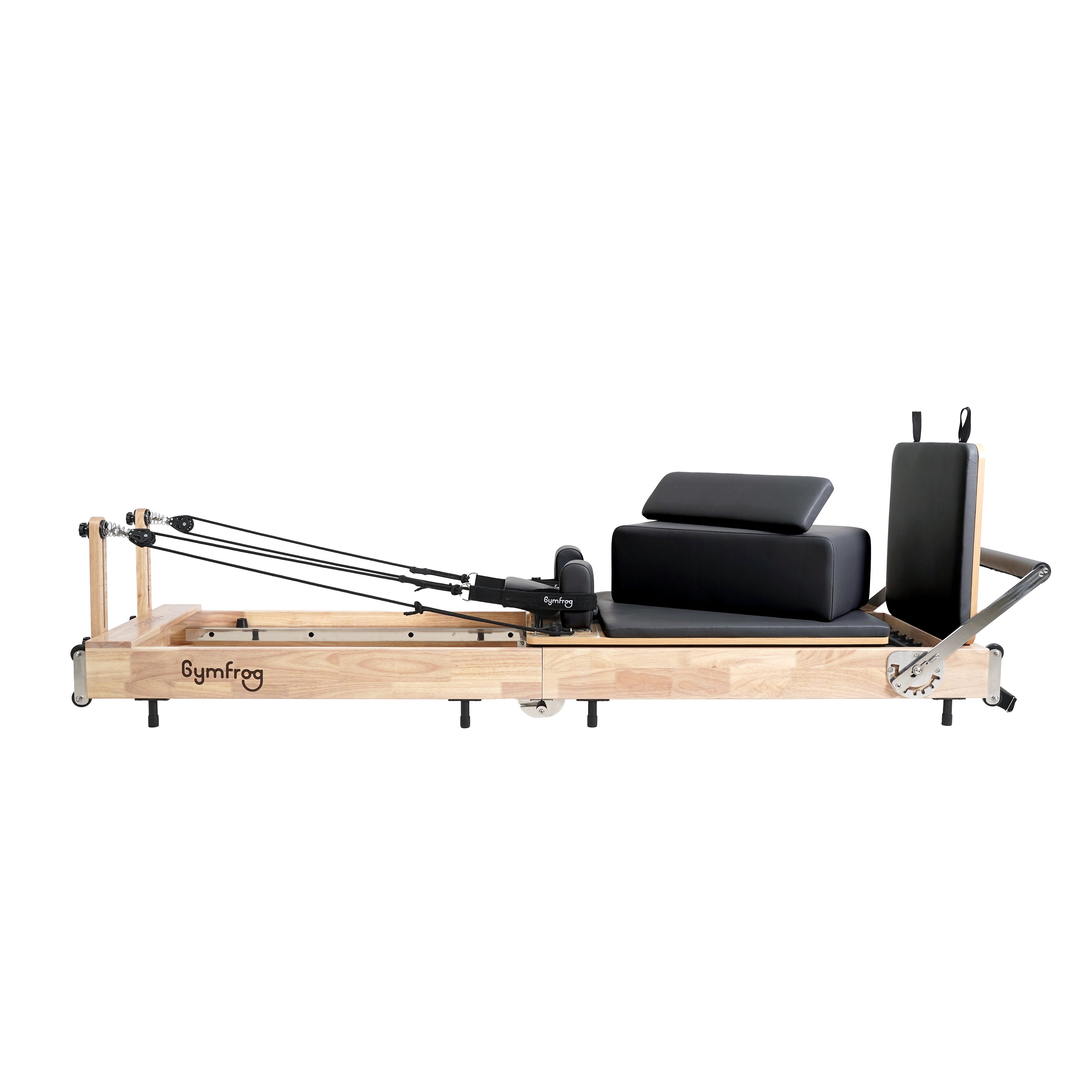
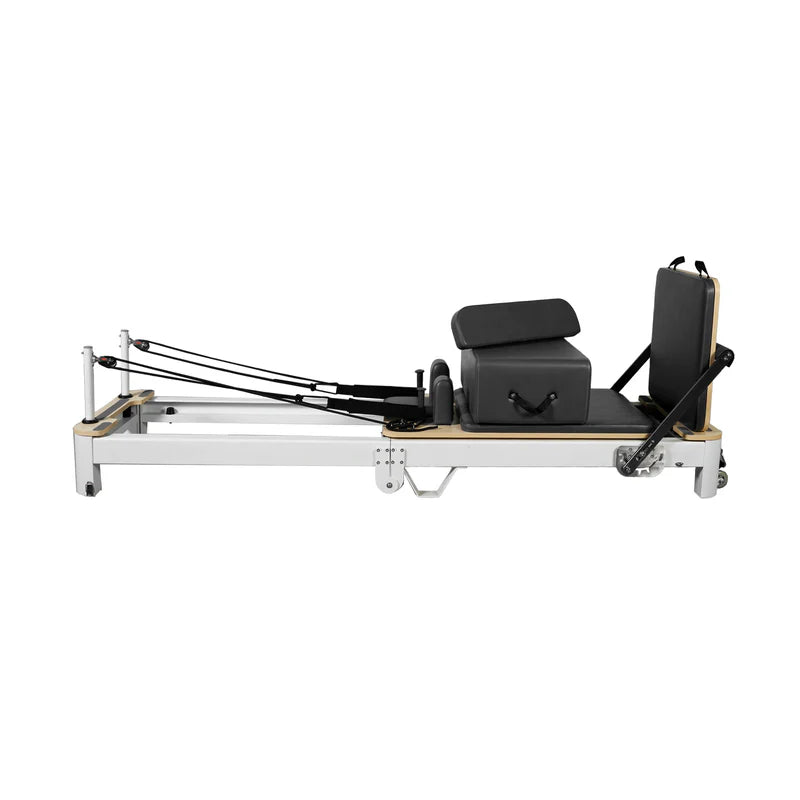
GymFrog combines a stable reformer frame, smooth carriage movement, and a gas spring-assisted folding mechanism with hydraulic damping to create a more convenient home Pilates experience.
Rather than relying on the gas spring alone, the folding performance is created through the interaction of several structural elements, including the gas spring force, mounting position, pivot points, linkage geometry, frame construction, and weight distribution.
Together, these elements help reduce the effort required to move the frame while maintaining a smoother and more controlled folding motion.
Designed for users who want professional-level Pilates training without permanently dedicating an entire room to fitness equipment, the Oak Adjustable-Leg Foldable Pilates Reformer Black provides a practical solution for modern homes.
From Mechanical Design to Better Daily Habits
The use of a gas spring with hydraulic damping represents more than a structural improvement.
It addresses a practical challenge faced by many home Pilates users: how to enjoy the stability and training experience of a professional-grade reformer while keeping daily storage simple and convenient.
Compressed nitrogen provides the assistance needed to reduce lifting effort, while hydraulic damping helps regulate movement speed. Combined with an optimized folding pivot and linkage system, these functions make the reformer easier to guide through the folding and unfolding process.
The result is not merely a reformer that can be folded. It is a folding system designed around how people actually use and store their equipment at home.
By improving force assistance, movement control, and overall stability, modern folding technology allows a foldable Pilates reformer to become a more natural part of everyday living.
A better design does not only make the equipment easier to store—it makes it easier to keep practicing.
Ready to Make Pilates Fit More Naturally Into Your Home?
Discover how a thoughtfully engineered foldable reformer can bring smooth, professional-style Pilates training into your everyday routine—without permanently taking over your living space.
Explore the GymFrog Oak Adjustable-Leg Foldable Pilates Reformer to learn more about its design, dimensions, included accessories, and home-training features.
Not sure whether this reformer fits your space or training needs? Contact the GymFrog team for product guidance before you order.


Leave a comment
This site is protected by hCaptcha and the hCaptcha Privacy Policy and Terms of Service apply.