
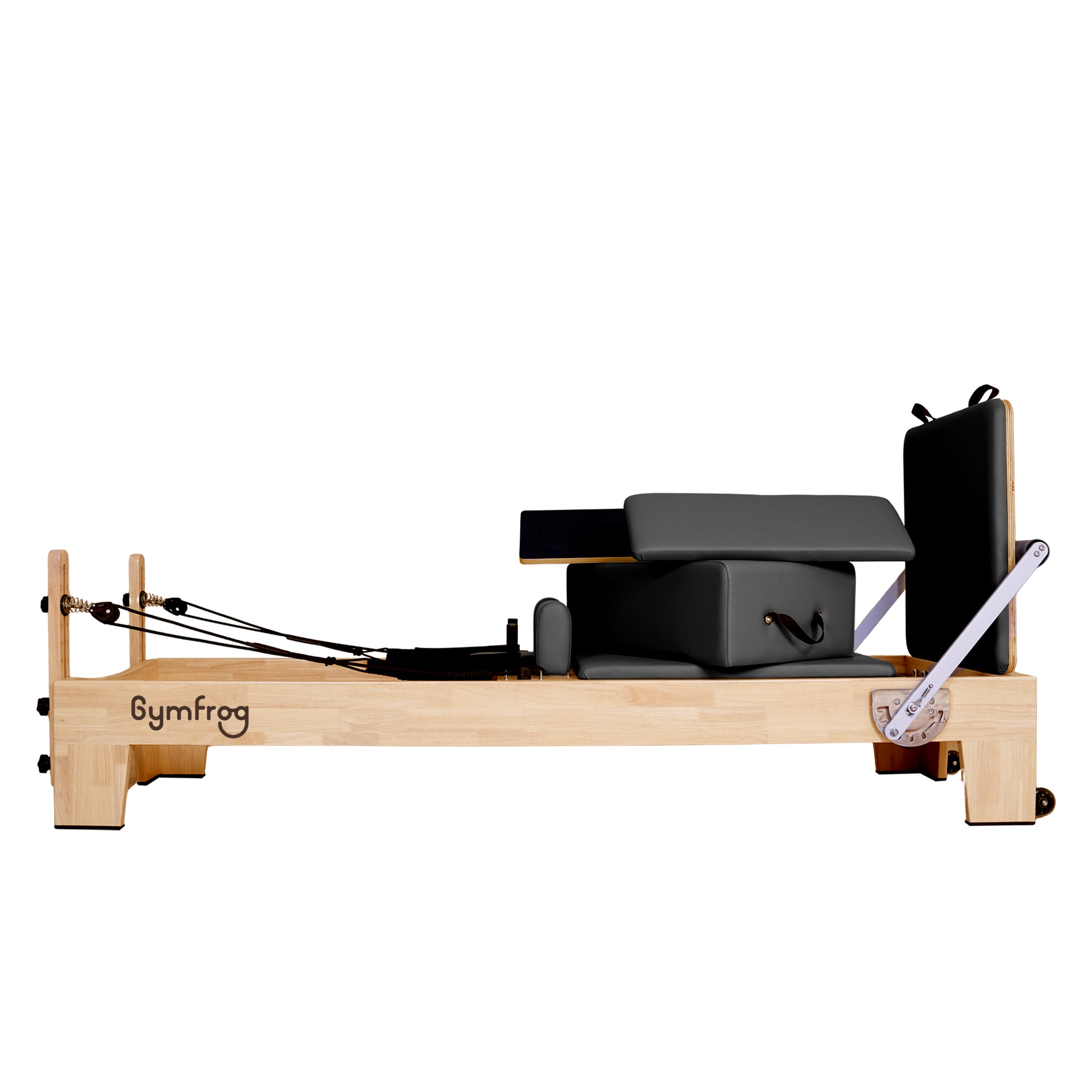
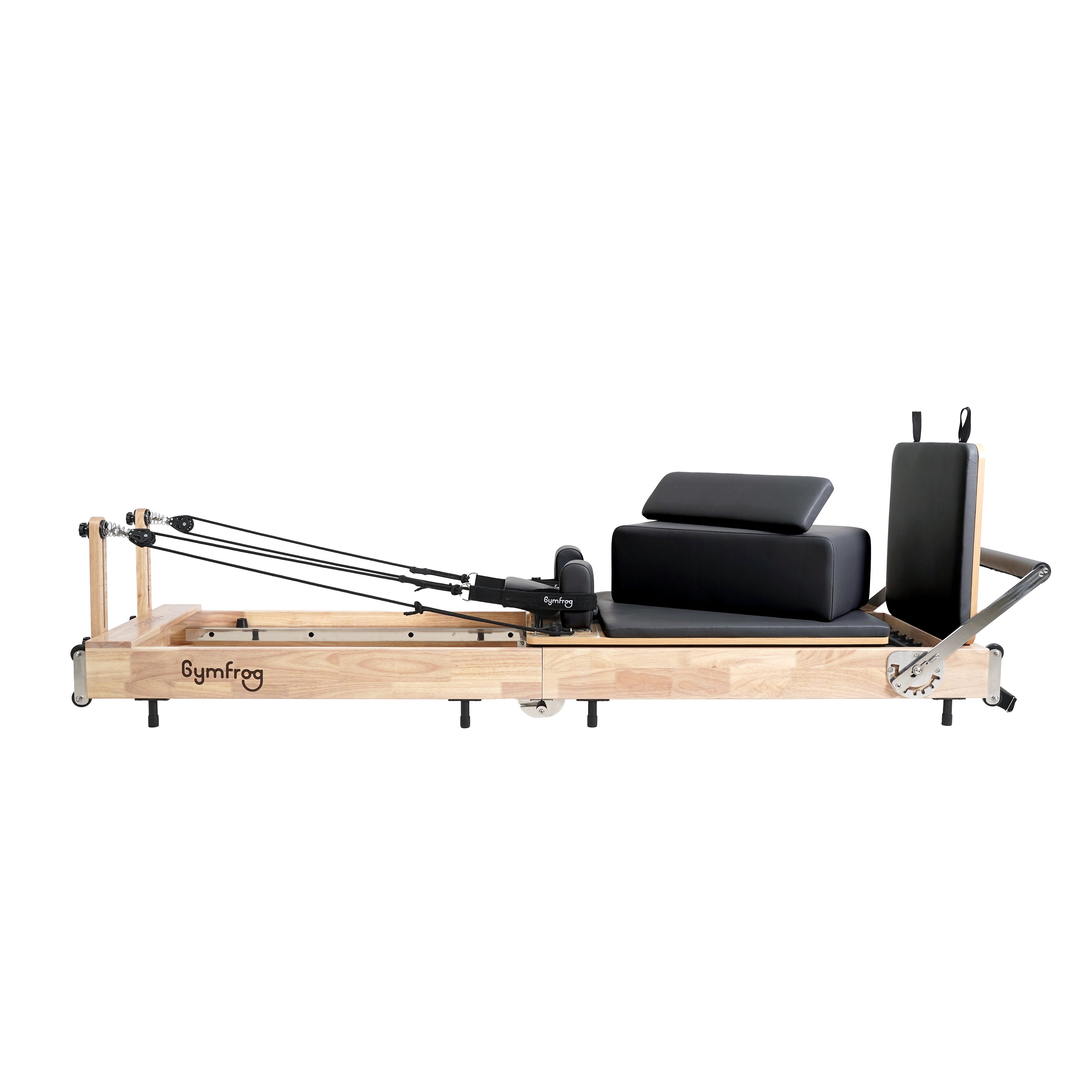
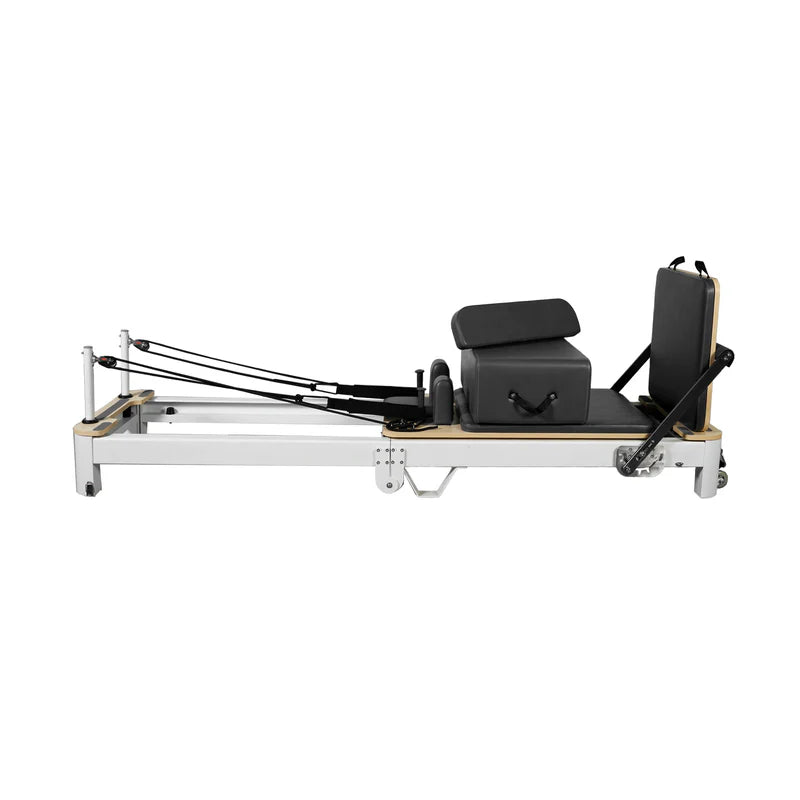
If you search for reformer pilates back exercises or a full pilates reformer back workout, this practical guide gives step-by-step instruction, beginner → advanced routines, and clear product guidance so you can train safely and get results. We also explain why Gymfrog reformers and back-specific equipment are an excellent choice for studios and home setups.
Why Reformer Pilates Is Particularly Effective for Back Strength
The Reformer offers controlled, adjustable resistance and guided movement that target spinal stabilization, the posterior chain, and scapular mobility — all critical for a healthy back. Unlike free weights, the Reformer encourages balanced activation of both superficial and deep muscles, improving posture and reducing compensatory movement patterns.
- Controlled Resistance: Springs allow graduated load for progressive strengthening.
- Spinal Articulation: Exercises emphasize safe flexion/extension with core support.
- Scapular & Thoracic Mobility: Many Reformer drills isolate mid-back and shoulder-blade control.
7 Best Pilates Reformer Back Exercises (Step-by-Step)
1. Mid-Back Series (Seated or Long Box Rows)
Purpose: Scapular control, upper-back strength, posture.
- Start: Sit tall on long box or carriage, feet grounded (or knees bent for support).
- Action: Pull straps/handles back keeping elbows close to ribs; squeeze shoulder blades together.
- Reps & Tempo: 8–12 reps; 3 sec pull, 1 sec hold, 3 sec return.
Key cues: Keep chest lifted, avoid shrugging shoulders, initiate from mid-back.
Variation: Increase spring tension for strength; use lighter spring to focus on form.
2. Pulling Straps (Prone & Seated)
Purpose: Upper back strength, posterior deltoid activation.
- Lie prone on long box or carriage with straps in hands.
- Lift chest slightly and pull straps to hips, drawing shoulder blades down and together.
- 8–10 reps; controlled eccentric return.
Product note: Long box setup works well on most Gymfrog Reformers.
3. Short Box Back Extension
Purpose: Thoracic extension, posterior chain coordination.
- Sit on short box facing carriage; feet anchored and hands behind head or crossed on chest.
- Perform small controlled extension through upper back, then return with core engaged.
- 10–12 reps; cue length through the spine rather than overextension.
4. Swan on the Reformer
Purpose: Dynamic extension for thoracic mobility and back strength.
- Lie prone on carriage with hands under shoulders or on handles.
- Use back extensors to lift chest while keeping pelvis stable; avoid compressing lumbar spine.
- 6–8 reps; focus on smooth concentric lift and controlled descent.
Modification: Reduce range for lumbar sensitivity; prioritize thoracic lift.
5. Reverse Knee Stretches
Purpose: Deep core activation and spinal decompression.
- Kneel on carriage with hands on footbar; tuck knees in and lift carriage back under control.
- 3–5 sets of 8–12 reps; maintain neutral neck and spine.
6. Feet in Straps – Back Mobility Flow
Purpose: Mobilize thoracic spine, lengthen posterior chain.
- Place feet in straps and perform small controlled spinal articulations: cat/cow style and gentle rotations.
- 8–10 cycles; excellent for warm-up or cool-down.
Works well with Gymfrog straps & accessories.
7. Tower Mid-Back Extensions
Purpose: Controlled thoracic extension using tower springs for variable resistance.
- Use tower attachment to perform standing or kneeling extensions that emphasize scapular retraction and thoracic lift.
- 6–10 reps; use light-to-moderate spring tension.
Recommended if your studio uses a Pilates Tower.
Complete Reformer Back Workout Plans
Choose a plan based on experience. Each plan pairs exercises above into a concise session.
Beginner – 15 Minutes
- Warm-up: Feet in Straps mobility (5 cycles)
- Mid-Back Series: 2 sets × 8 reps
- Short Box Back Extension: 2 sets × 8–10 reps
- Cool-down: Supported thoracic stretch on carriage (hold 30–60s)
Intermediate – 20 Minutes
- Warm-up: Pulling Straps light (1 set × 10)
- Swan on Reformer: 3 sets × 6 reps
- Reverse Knee Stretches: 3 sets × 8–10 reps
- Tower Mid-Back Extensions (if available): 2 sets × 8
Advanced – 25 Minutes
- Dynamic warm-up: Feet in Straps & controlled rotations
- Mid-Back Series heavy: 3 sets × 10 (progressive spring)
- Pulling Straps + Long Box sequences: 3 sets
- Finisher: Controlled single-leg Swan variations 6–8 reps
Tip: Track load and progress by increasing spring level, reps, or adding controlled tempo changes.
Back Training Safety & Modifications
If you have a history of acute lumbar pain, recent surgery, or radicular symptoms, consult a clinician before starting. Use these conservative rules:
- Prioritize breathing and core engagement over range-of-motion.
- Reduce springs to focus on motor control when learning an exercise.
- Swap high-extension drills for supported or partial-range alternatives.
When in doubt, scale back and master form — consistent, controlled practice beats occasional maximal efforts.
Why Gymfrog Reformers & Accessories Are Ideal for Back-Focused Training
As you progress from rehabilitation to conditioning and performance, equipment quality matters. Gymfrog delivers purpose-built Pilates gear engineered for safe, repeatable, studio-grade back training:
Commercial-Grade Construction
Gymfrog reformers feature heavy-duty frames (oak or aircraft-grade aluminum), reinforced rails, and high-quality springs designed for continuous studio use. The result: consistent resistance and long-term reliability.
Precision Carriage & Low-Noise Glide
Smooth carriage movement reduces jerk and promotes precise spinal articulation — essential when training sensitive backs.
Modular Systems for Full Back Programs
Combine Reformers, Towers, and Cadillacs to create seamless progressions from mobility to strength work.
Accessories That Support Back Health
Gymfrog provides boxes, straps, spine correctors, and ladder barrels — all designed to expand exercise options and protect the lumbar region while targeting thoracic mobility and scapular control.
Recommended Gymfrog Products for Back Training
- Pilates Reformers — studio and home models with smooth glide and adjustable springs
- Pilates Towers — ideal for mid-back extensions and stabilizing drills
- Pilates Cadillacs — full-body, versatile for rehab and advanced work
- Wunda Chairs — compact strength tool for posterior chain work
- Ladder Barrels — prime for thoracic mobility and spinal extension
- Spine Correctors — alignment-focused tool for correction and length
- Pilates Accessories — straps, handles, boxes and more for precise variations
For studio owners: consider a package solution combining reformers, towers, and cadillacs to create a comprehensive back-strengthening curriculum.
Ready to Upgrade Your Back Training?
Explore Gymfrog’s studio-grade equipment to build a safe, progressive back program that scales from rehab to performance. Browse our collections and contact our team for custom studio quotes, factory-direct pricing, and configuration guidance.
Pro tip: Add UTM parameters to links used in marketing (e.g. ?utm_source=blog&utm_medium=article&utm_campaign=reformer_back_workout) so you can measure conversions and refine messaging over time.
FAQ
Q: Are Reformer exercises safe for people with chronic low back pain?
A: Many Reformer exercises can be safe and beneficial when prescribed and supervised appropriately. Start with low resistance, prioritize core support, and consult a healthcare professional if you have radicular symptoms or recent surgery.
Q: How often should I perform a Reformer back workout?
A: 2–3 focused sessions per week can deliver measurable improvements in strength and posture. Pair Reformer sessions with mobility work and active recovery.
Q: Which Gymfrog product helps most with thoracic mobility?
A: Ladder Barrels and Spine Correctors are specifically designed to encourage thoracic extension and safe spinal mobilization.
Q: I run a studio — can Gymfrog help with bulk orders or custom branding?
A: Yes. Gymfrog supports studio packages, bulk pricing, and customization options. Contact our sales team for a tailored quote and production timeline.

Leave a comment
This site is protected by hCaptcha and the hCaptcha Privacy Policy and Terms of Service apply.