
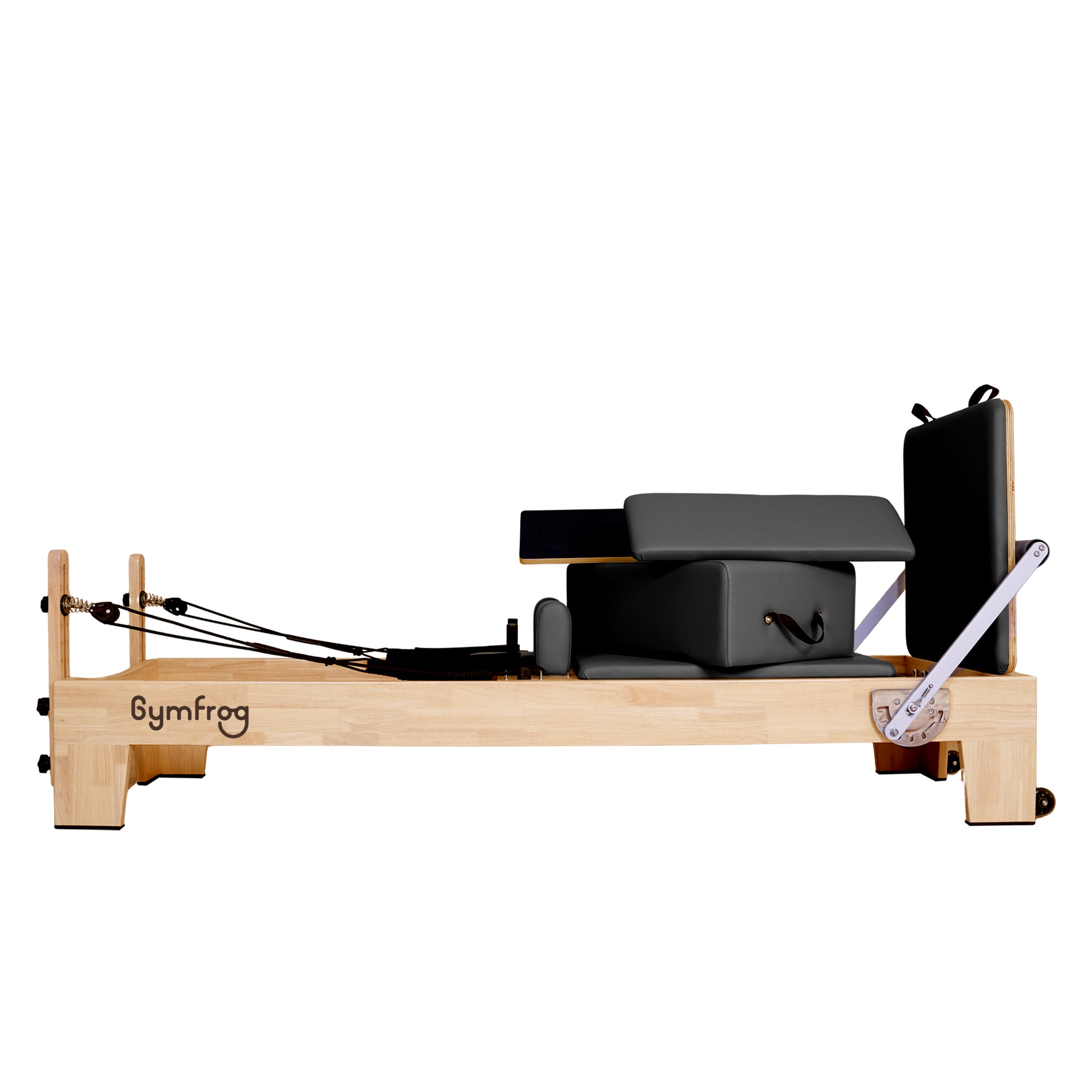
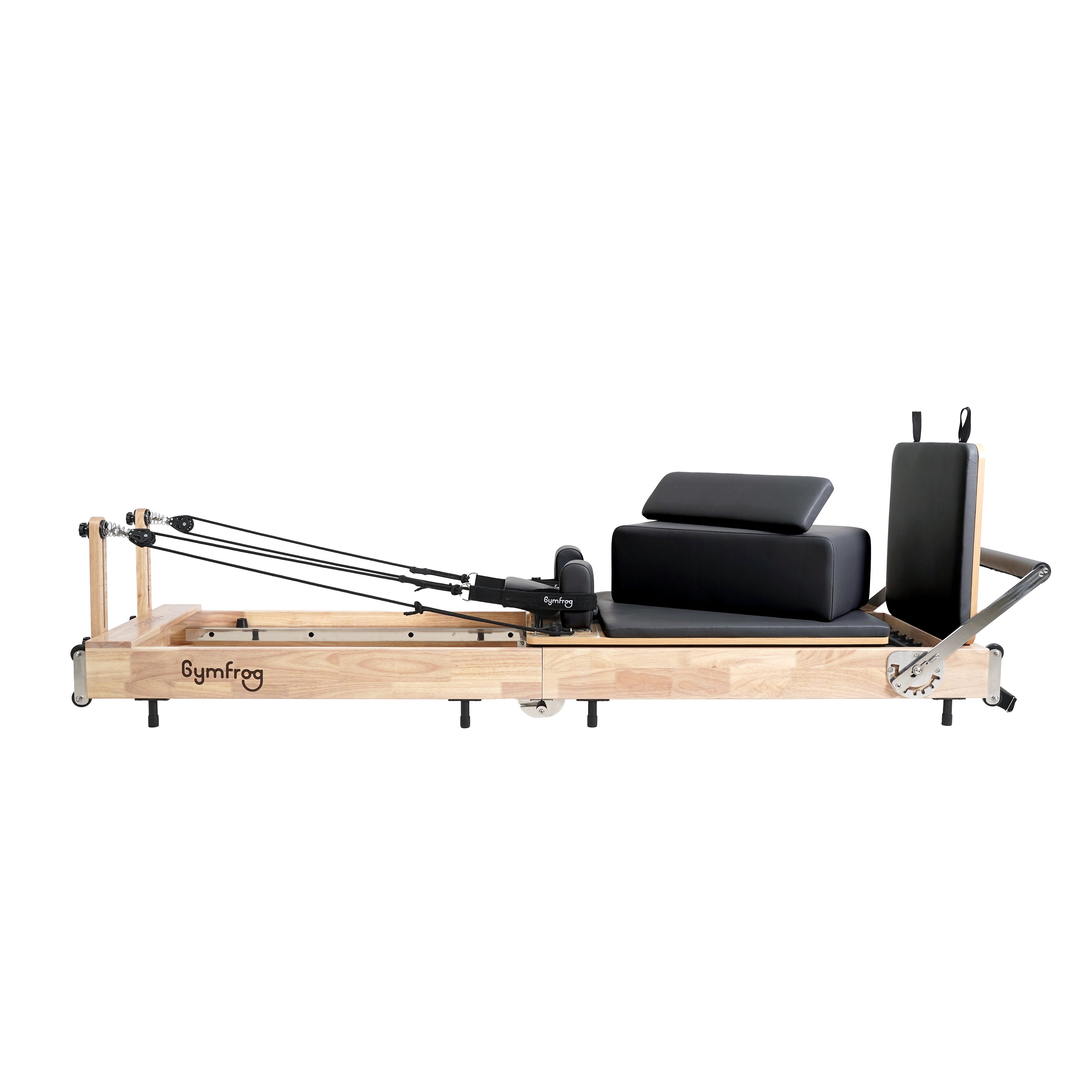
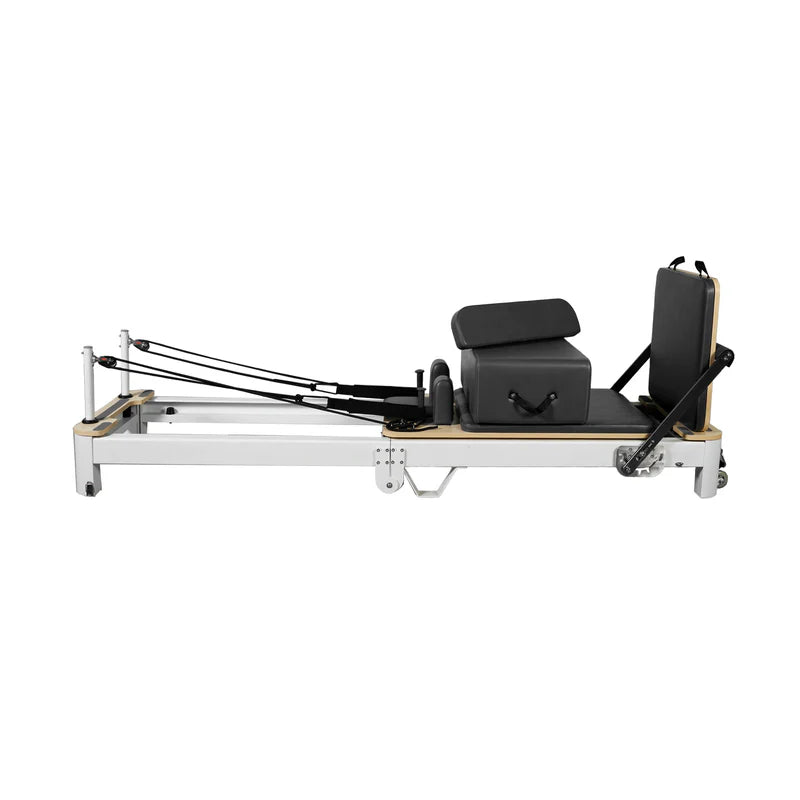
The Pilates Tower is one of the most versatile attachments for a Reformer — it adds spring-loaded resistance for pushing, pulling and controlled lengthening, making it excellent for beginners who want safe progression, posture work and strength. This practical guide covers the 10 best Tower exercises for beginners, full routines, safety tips, and product recommendations from Gymfrog so you can train confidently and progress faster.
Why Use a Reformer Tower — Benefits for Beginners
The Tower attachment transforms a Reformer into a multifunctional station: it provides vertical spring resistance for stretching, pushing and pulling movements that are ideal for building balanced strength, improving posture and teaching precise movement patterns. For beginners, Towers help isolate muscles safely and let instructors scale resistance easily.
- Progressive resistance: springs allow fine increments of load for beginners.
- Versatility: push, pull, traction and stretch options in one station.
- Control & safety: guided spring tension reduces compensatory movement.
Top 10 Pilates Reformer Tower Exercises (Beginner-Friendly)
1. Standing Chest Press (Tower)
Purpose: Upper chest & shoulder stability; beginner pressing pattern.
- Attach handles at mid-tower height. Stand facing away from tower, one foot forward for balance.
- Hold a handle in each hand, elbows bent. Press forward until arms extend, then control back to start.
- 8–12 reps. Keep ribs down and shoulders away from ears.
Modification: Reduce spring tension or perform seated on Reformer carriage for more stability.
Gymfrog tip: Try the Gymfrog Tower with adjustable anchor points for easiest progression.
2. Tower Row (Seated or Standing)
Purpose: Mid-back strengthening & scapular retraction.
- Set handles at chest height. Sit on carriage or stand with a slight hinge. Pull handles toward sternum, squeezing shoulder blades.
- 8–12 reps; 3-second eccentric return.
Cues: Keep chest lifted, avoid shrugging; initiate from mid-back not arms.
Works well with: Gymfrog Reformers (long box or seated options).
3. Tower Leg Press (Supine)
Purpose: Lower-body strength & core stabilization using Tower springs.
- Lie supine on carriage with feet on a low tower bar or handles. Press out with controlled spine stabilization.
- 10–15 reps; maintain neutral pelvis and long neck.
Modification: Reduce spring tension to focus on control.
4. Tower Assisted Roll-Up
Purpose: Spinal articulation and abdominal control with assisted eccentric.
- Hook a strap around the feet, hold ends near hands. Use light spring to assist controlled roll-up and roll-down.
- 8–10 reps; focus on sequential spinal articulation.
Beginner tip: Use lighter spring to make the upward phase accessible while practicing proper curl.
5. Standing Forward Push (Tower)
Purpose: Core stability under load and shoulder flexion control.
- Face the tower, handles at shoulder height. Press both handles forward while keeping pelvis stable.
- 6–10 slow reps; exhale to press, inhale to return.
Modification: Perform seated on the carriage for beginners.
6. Tower Pull-Down (Lat Emphasis)
Purpose: Latissimus and scapular depression; improves posture.
- Grip long straps overhead and pull down toward shoulders, drawing shoulder blades down and together.
- 8–12 reps; control the return.
Gymfrog equipment: Use Gymfrog Tower with secure overhead anchors.
7. Tower Mermaid / Lateral Flexion
Purpose: Side-body lengthening, rib cage mobility and oblique engagement.
- Sit sideways on carriage, hold one handle overhead. Perform controlled lateral flexion away from the tower.
- 6–8 reps each side; emphasis on long side-body and breathing into the lower ribs.
8. Assisted Spine Extension (Tower + Box)
Purpose: Thoracic extension and spinal mobility using a small box or support.
- Place a small box on the carriage; rest upper spine over it and use light tower springs to support extension lifts.
- 6–8 gentle lifts; keep lumbar neutral and move from thoracic spine.
Great with: Ladder Barrels and Spine Correctors for additional mobility options.
9. Tower Standing Leg Circles / Hip Work
Purpose: Hip stability and controlled pelvic movement while the tower provides resistance or support.
- Attach strap to ankle; stand sideways and perform small controlled circles with the leg while stabilizing the pelvis.
- 8–10 circles each direction; keep torso stable.
10. Assisted Hamstring & Glute Stretch (Tower)
Purpose: Mobility, posterior chain lengthening and relief for lower back tension.
- Hook one foot in strap; lie on carriage and use spring support to lift the leg into a gentle hamstring stretch.
- Hold 30–60 seconds; repeat 2–3 times each leg.
Tip: Keep opposite pelvis stabilized and breathe deeply to ease tension.
Beginner 15–20 Minute Tower Routine (Followable)
Simple, repeatable plan to practice 2–3 times per week:
- Warm-up (3–4 min): Feet in straps mobility (gentle cat/cow on carriage) + light tower pull-downs (1 set × 8).
-
Main (10–12 min):
- Mid-Back/Tower Row — 2 sets × 8
- Swan or Assisted Spine Extension — 2 sets × 6
- Standing Chest Press — 2 sets × 8
- Mermaid (each side) — 1 set × 6
- Cool-down (2–4 min): Assisted hamstring stretch + deep breathing on Spine Corrector or low tower support.
Progression: Increase spring tension slowly, add reps or tempo changes, or move a seated exercise to a standing variation.
Recommended Gymfrog Equipment & How to Set Up
To get the most from Tower training, pair your Tower with complementary Gymfrog equipment:
- Pilates Reformers — choose a model with Tower compatibility and a smooth carriage for safe progressions.
- Pilates Towers — adjustable anchors and multiple spring positions let you tailor resistance precisely.
- Pilates Cadillacs — add variety with controlled overhead work for group classes or rehab.
- Spine Correctors & Ladder Barrels — excellent cross-training tools for thoracic mobility and extension work.
- Boxes, straps and handles — small accessories that unlock more Tower variations.
Gymfrog tip: For studio buyers, consider packaging Reformers + Towers + Accessories to ensure consistent feel and warranty coverage across equipment.
Safety, Spring Settings & Modifications
Begin with light spring tension and focus on control. Key safety rules:
- Always check straps, springs and anchor points before use.
- Choose lighter springs when learning new patterns; increase only once form is reliable.
- Maintain neutral pelvis and core engagement; avoid sudden jerks or overreaching.
- If you have acute back pain, sciatica, or recent surgery, get professional clearance.
Suggested starter spring guide (example): use 1–2 light springs for upper-body tower work and 2–3 light springs for lower-body work; adjust by client comfort and stability.
Where to Buy Gymfrog Tower-Compatible Reformers & Packages
If you want consistent performance from learning through advanced Tower work, choose equipment built for durability and smooth progression. Explore Gymfrog's studio and home solutions:
- Pilates Reformers
- Pilates Towers
- Pilates Cadillacs
- Wunda Chairs
- Ladder Barrels
- Spine Correctors
- Pilates Accessories
Pro tip: For marketing tracking add UTM parameters to links: ?utm_source=blog&utm_medium=article&utm_campaign=tower_beginner_guide so you can measure conversions and refine messaging.
Contact Gymfrog Sales for package quotes, custom colors, and studio setup guidance.
FAQ
Q: What is a Pilates Tower and is it necessary?
A: A Tower is an attachment that adds vertical springs and anchors to your Reformer. It is not required, but it greatly expands exercise options (push/pull/traction) and is very useful for beginners learning controlled movement patterns.
Q: Can beginners use Tower exercises safely?
A: Yes — with appropriate spring selection, professional guidance, and focus on control. Start with lower resistance and simpler variations before progressing.
Q: Which Gymfrog model is best for a Tower setup?
A: Choose a Gymfrog Reformer model that advertises Tower compatibility (see Reformers and Pilates Towers). Contact our sales team for package recommendations tailored to home vs studio needs.
Q: How often should beginners practice Tower routines?
A: 2–3 focused sessions per week is a great starting point. Combine tower sessions with mobility work and active recovery.

Leave a comment
This site is protected by hCaptcha and the hCaptcha Privacy Policy and Terms of Service apply.