
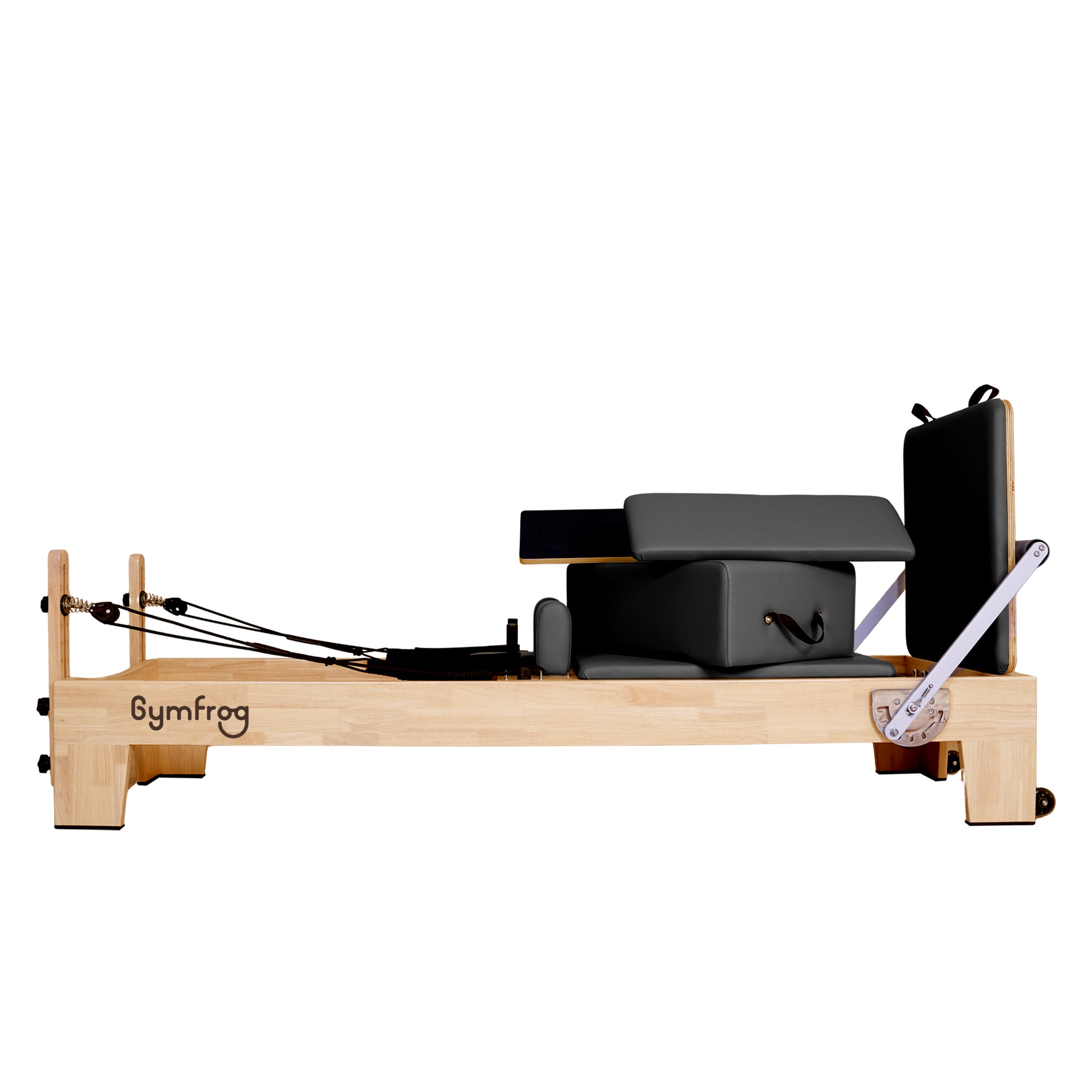
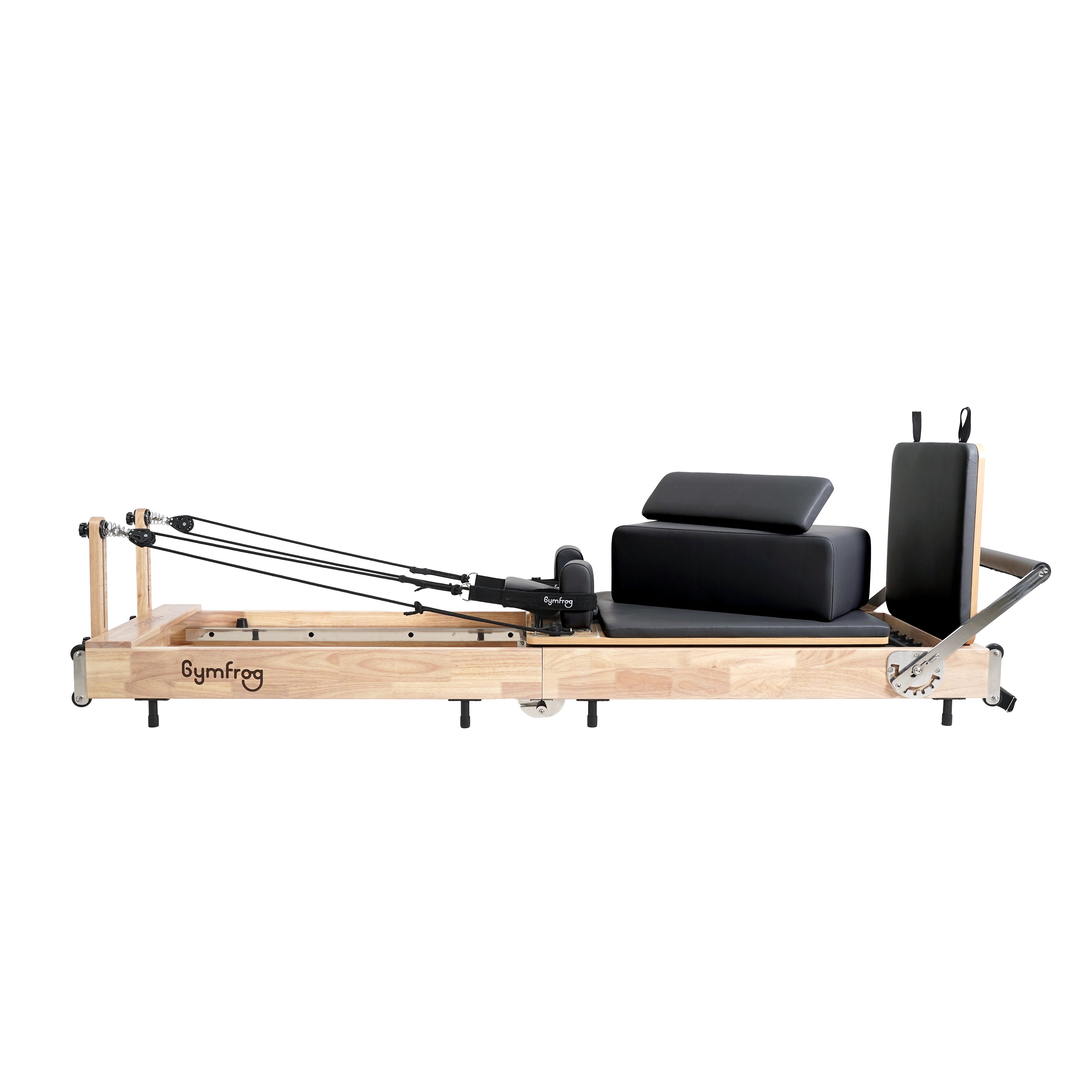
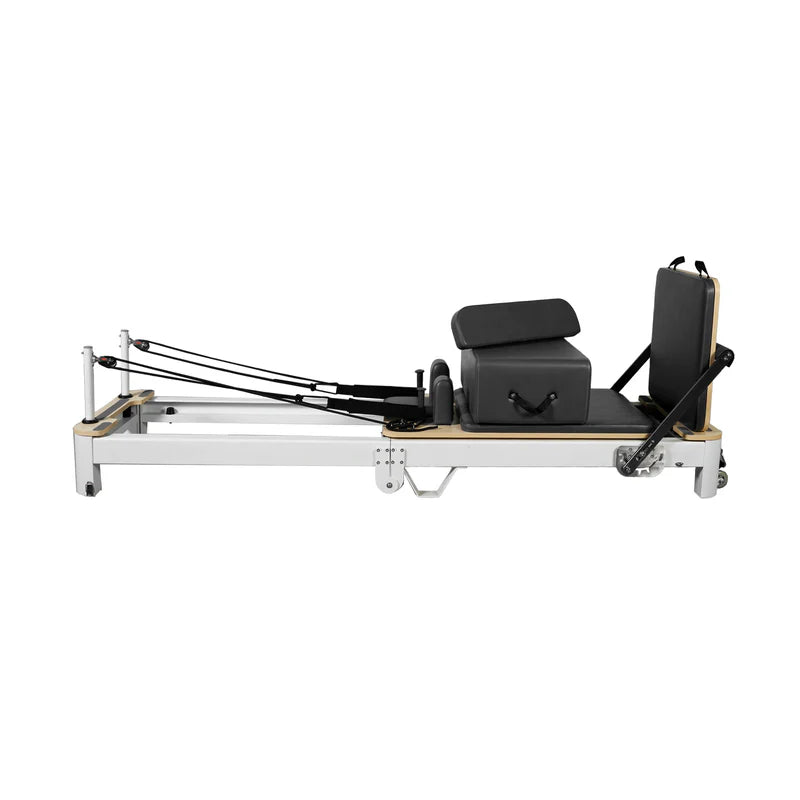
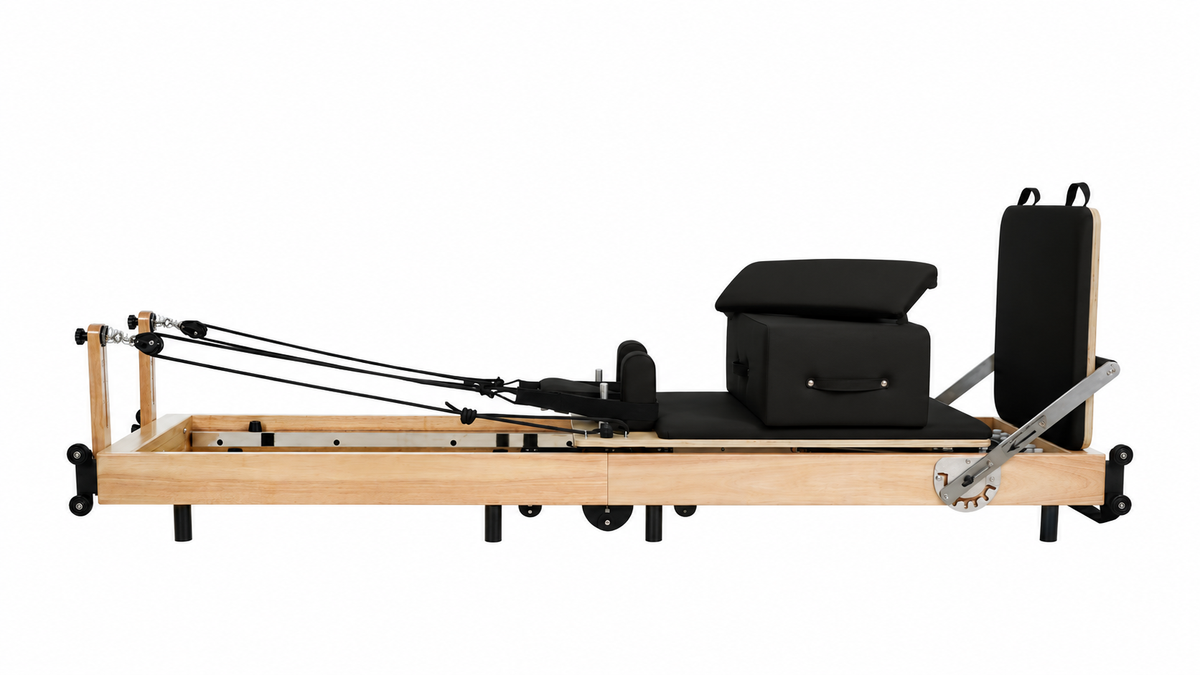
A Pilates reformer carriage should move in a controlled, predictable way. It does not need to feel weightless, and the resistance should not remain identical throughout every exercise. However, the carriage should not suddenly stick, drag, jerk, shift sideways, or require unusual force to move.
If your reformer carriage is no longer sliding smoothly, the first step is to determine whether the resistance comes from the carriage's rolling system, the spring or rope system, the equipment setup, or an obstruction.
That distinction matters. A carriage that feels heavy because several springs are attached is not the same as a carriage that catches at one point along the rail. Likewise, a carriage that moves normally when empty but feels uneven under body weight may require a different inspection from one that binds even without a user on it.
This guide focuses on identifying the pattern of abnormal movement before attempting a repair.
Important: Pilates reformers use different carriage, wheel, bearing, rail, spring, and pulley designs. Follow the instructions for your specific model. Do not remove the carriage, disconnect safety-critical components, adjust wheel assemblies, or apply lubricant unless the manufacturer provides an approved procedure.
First: Is It Normal Spring Resistance or Abnormal Carriage Friction?
Before looking for a mechanical fault, consider how a reformer is designed to work.
The springs provide resistance as the carriage moves away from its resting position. Depending on the spring configuration and exercise, the force required to move the carriage can change throughout the movement.
That is different from friction or binding.
Normal resistance generally feels controlled and predictable. Abnormal friction may feel like the carriage is catching, dragging, hesitating, or moving unevenly.
| What You Feel | What It May Indicate |
|---|---|
| Resistance increases predictably as the carriage moves outward | Normal spring resistance, depending on the setup |
| Carriage feels heavier after adding springs | A change in spring configuration |
| Carriage catches at the same position every time | Localized rail, wheel, alignment, or obstruction issue |
| Carriage feels rough throughout its travel | Rolling-system friction or another moving component |
| Carriage moves unevenly from side to side | Possible wheel, guide, or alignment issue |
| Carriage moves normally empty but feels abnormal under load | Load-related rolling, frame, or alignment issue |
| Carriage moves smoothly outward but returns unevenly | Spring return, rope interaction, obstruction, or rolling-system issue |
| Resistance changes suddenly without changing the setup | Inspect before continuing exercise |
The goal is not to make the carriage move with as little resistance as possible. The goal is to make sure the resistance comes from the intended exercise system rather than an unintended mechanical problem.
Quick Carriage Troubleshooting Chart
Use the pattern of movement to decide where to inspect first.
| Symptom | First Area to Check | What to Look For |
|---|---|---|
| Sticks at one specific position | Rails, wheels, carriage path | Debris, localized damage, obstruction |
| Feels rough throughout the movement | Wheels, bearings, rails | Wear, contamination, abnormal rolling |
| Moves unevenly or shifts sideways | Wheel assemblies, guides, alignment | Visible looseness, uneven contact |
| Feels heavy only with springs attached | Spring configuration | Correct spring selection and attachment |
| Returns unevenly | Springs, ropes, pulleys, carriage path | Incorrect routing, interference, abnormal resistance |
| Problem started after assembly | Installation and component positioning | Incorrectly installed or unsecured components |
| Problem started after moving the machine | Frame, leveling, rails, connections | Transport damage, shifted components, unstable setup |
| Problem appears only under body weight | Frame, carriage support, wheel system | Load-related movement or instability |
These are diagnostic starting points, not confirmed causes. If the carriage is visibly damaged, unstable, or difficult to move, stop using the reformer before attempting further tests.
1. The Carriage Sticks at the Same Position Every Time
A carriage that catches at one particular point is different from one that feels generally heavy.
If the resistance repeatedly appears at the same location, inspect that section of the carriage path first.
Possible causes include:
- dust, hair, or debris on the rail
- a foreign object near the carriage
- localized rail damage
- a damaged or contaminated wheel surface
- hardware contacting the moving carriage
- a component that has shifted out of position
With the reformer unoccupied, inspect the accessible rail surfaces and carriage path. If the manufacturer's instructions permit it and no damage or instability is present, move the carriage slowly through its normal range.
Notice whether the resistance occurs at the same physical location.
For example:
Does the carriage catch when it reaches the middle of the rail, regardless of how quickly you move it?
That pattern may point toward a localized obstruction or contact issue.
By contrast, a problem that repeats according to wheel rotation rather than carriage position may suggest something associated with a rotating component.
Do not force the carriage past a hard stop or repeated point of binding. If you cannot identify an obvious removable obstruction, contact support before continuing.
2. The Carriage Feels Rough Throughout Its Travel
If the carriage feels gritty, resistant, or uneven along most of its movement, inspect the rolling system.
Depending on the reformer model, this may include:
- carriage wheels or rollers
- wheel bearings
- guide wheels
- rails or tracks
- wheel mounting assemblies
- visible contact surfaces
Start with a visual inspection.
Look for dust, hair, fibers, small particles, damaged wheel surfaces, cracks, flat spots, or unusual wear.
Clean only the accessible areas using the method recommended for your model. Do not place fingers or cleaning tools near moving wheels while someone is on the carriage.
Manufacturer maintenance guidance commonly emphasizes keeping reformer rails and rollers clean to maintain smooth movement and reduce unnecessary wear.
What if cleaning does not improve the movement?
If the carriage remains rough after accessible debris has been removed, the issue may involve a component that requires closer inspection.
Possible examples include:
- a wheel that is not rotating normally
- bearing resistance
- wheel surface damage
- an incorrectly positioned wheel assembly
- abnormal wheel-to-rail contact
Do not assume that a bearing needs oil simply because the carriage feels rough. Some bearing systems are sealed or have model-specific service requirements.
If the wheel or bearing assembly needs adjustment or replacement, use the manufacturer's approved procedure or contact a qualified service provider.
3. The Carriage Moves Unevenly or Shifts to One Side
A carriage should remain properly guided as it travels along the reformer frame.
If you notice unusual side-to-side movement, uneven contact, or a feeling that one side is dragging, inspect the carriage guidance system.
Possible areas include:
- side wheels or guide wheels
- wheel mounting hardware
- carriage alignment
- rail positioning
- frame connections
- visible wear on one side of the carriage path
Do not attempt to correct the problem by randomly tightening every accessible bolt.
Some reformers use adjustable side-wheel systems, and the correct adjustment depends on the specific design. Balanced Body, for example, provides separate model-specific instructions for adjusting side wheels when a carriage moves excessively from side to side. Those instructions should not be assumed to apply to other manufacturers' equipment.
For a Gymfrog reformer, use the appropriate installation or service instructions for your exact model.
If the carriage is wobbling, lifting, or visibly moving out of alignment, stop using it until the cause has been identified.
4. The Carriage Feels Heavy Only When Springs Are Attached
If the carriage moves normally during an approved unloaded inspection but feels unusually heavy during exercise, consider the resistance setup before assuming the wheels are faulty.
Check:
- the number of springs attached
- the spring resistance levels
- the spring attachment positions
- whether the setup matches the intended exercise
- whether any spring is visibly damaged or incorrectly attached
Adding springs or changing the spring configuration can significantly change how much force is required to move the carriage.
However, normal spring resistance should not feel like a sudden mechanical catch or obstruction.
If the resistance changes unexpectedly, one spring feels substantially different from its usual behavior, or a spring shows deformation, corrosion, damaged hooks, or loose attachment points, stop using the affected equipment and seek model-specific guidance.
For more information about resistance setup, see Gymfrog's guide to adjusting the springs on a Pilates reformer.
5. The Carriage Moves Smoothly Outward but Returns Unevenly
A carriage that feels different on the outward and return movements can be difficult to diagnose because several systems may be involved.
The spring system provides the returning force, while the carriage continues to travel along the same rolling path. Depending on the exercise and equipment configuration, ropes and pulleys may also be involved.
Ask:
Does the problem happen during every exercise or only when using the ropes and straps?
If it occurs only during rope-based exercises, inspect the accessible rope and pulley system.
Look for:
- incorrect rope routing
- rope rubbing against another component
- uneven rope length or adjustment
- damaged rope fibers
- pulley misalignment
- a pulley that does not rotate normally
If the problem occurs during footwork as well as rope exercises, the carriage, spring, or frame system may be more relevant.
Do not adjust rope length simply to compensate for a carriage that is binding. Rope adjustment and carriage friction are different issues, and changing the rope setup may make the original problem harder to identify.
6. The Problem Started After Assembly or Moving the Reformer
If the carriage felt normal before the machine was moved, transported, folded, unfolded, or reassembled, that history is an important diagnostic clue.
Check whether:
- the reformer is on a stable, level surface
- all required frame and leg connections are correctly installed
- the rails are free from visible damage
- the carriage is correctly positioned
- accessories are not obstructing the carriage path
- the footbar and adjustment components are properly secured
- folding or locking components are in their intended operating positions
Do not assume that a newly assembled reformer is ready for exercise merely because the carriage can move.
For Gymfrog equipment, refer to the Reformer Installation Guide Center and the instructions for your exact model. The installation center includes model-specific assembly videos and recommends placing the equipment on a flat, stable floor.
If the carriage began binding after transport or assembly and you cannot identify the cause, contact support rather than attempting to realign the frame or wheel assemblies without instructions.
7. The Carriage Feels Normal Empty but Uneven Under Body Weight
This pattern deserves particular attention.
A carriage that moves smoothly without a user but feels unstable, rough, or uneven under load may indicate that the problem becomes apparent only when the equipment is carrying weight.
Possible areas to inspect include:
- carriage support wheels
- guide wheels
- wheel mounting assemblies
- frame connections
- rail alignment
- leg or floor contact
- other load-bearing components
Do not repeatedly exercise on the reformer to reproduce the problem if you notice wobbling, abnormal resistance, structural movement, or visible damage.
A safe visual inspection may help identify an obvious issue, but load-related faults can require professional assessment.
If the carriage is unstable under body weight, stop using the equipment until the cause has been identified.
A Safe Carriage Inspection Sequence
You do not need to take the reformer apart to collect useful troubleshooting information.
Step 1: Stop the Workout
If the carriage suddenly sticks, jerks, grinds, or becomes difficult to control, stop exercising.
Do not force it through the resistance.
Step 2: Record the Symptom
Note whether the problem occurs:
- throughout the movement
- at one position
- only on the return
- only with springs attached
- only during rope exercises
- only under body weight
- after assembly or relocation
Step 3: Inspect Accessible Components
Look for visible debris, damaged wheels, loose components, rope interference, or anything obstructing the carriage path.
Do not remove protective covers or disassemble the carriage unless your model's instructions permit it.
Step 4: Clean Accessible Rails if Appropriate
Use the cleaning method specified for your reformer.
Remove visible dust or debris without placing hands near moving or tensioned components.
Step 5: Perform Only Manufacturer-Approved Movement Checks
If no warning signs are present, follow your model's instructions for checking carriage movement without a user.
Do not disconnect all springs or remove the carriage based on a generic online tutorial. Some procedures require specific maintenance configurations, tools, or assistance.
Step 6: Stop if the Problem Persists
If the carriage remains rough, binds repeatedly, shifts sideways, or shows abnormal resistance, do not continue making random adjustments.
Record a short video and contact support.
Should You Lubricate the Rails or Wheels?
Not automatically.
A reformer carriage generally moves through a wheel or roller system rather than simply sliding metal against metal. The correct maintenance method depends on the design of the rails, wheels, bearings, and other moving components.
Applying an unsuitable lubricant may attract debris, affect the intended contact surfaces, or interfere with components that are not designed to be lubricated.
Use only the lubricant, amount, and application point specified for your exact reformer model.
Do not apply WD-40, household oil, grease, or silicone spray simply because the carriage feels dry or rough.
If cleaning does not resolve the problem, identify the cause before applying anything else.
For routine care, refer to the Gymfrog Pilates Reformer Maintenance & Care Guide. For model-specific lubrication or repair questions, contact Gymfrog support.
When Should You Stop Using the Reformer?
Stop using the reformer and arrange further inspection if you notice:
- the carriage becomes difficult to move suddenly
- repeated binding or a hard obstruction
- grinding accompanied by rough movement
- visible wheel or rail damage
- abnormal side-to-side carriage movement
- carriage lifting or wobbling
- a wheel that does not rotate correctly
- damaged or loose spring attachments
- frayed ropes or damaged pulley components
- unstable frame or footbar connections
- abnormal movement after assembly or transport
- a sudden change in resistance that cannot be explained by the setup
Do not attempt to overcome mechanical resistance by adding more body weight or using a stronger spring configuration.
A reformer should provide controlled exercise resistance—not unpredictable mechanical resistance.
What Information Should You Send Gymfrog Support?
If the issue cannot be resolved through basic, model-approved inspection, provide enough information to help the support team identify the affected system.
| Information | Example |
|---|---|
| Reformer model | Exact Gymfrog model name |
| When the problem started | After assembly, after moving, gradually, suddenly |
| Main symptom | Sticking, dragging, jerking, uneven resistance |
| Location | Front, middle, rear, one side |
| Movement direction | Outward, return, both |
| Loaded or unloaded | Whether it occurs with nobody on the carriage |
| Spring configuration | Springs attached during normal use |
| Rope involvement | Footwork only, rope exercises only, or both |
| Visible condition | Debris, wear, damage, looseness, rub marks |
| Video | Short clip showing the movement and symptom |
A useful video should show the whole reformer first, then the area where the problem occurs. If safe, demonstrate the symptom using only the inspection procedure permitted for your model.
Do not continue exercising on an unstable or visibly damaged reformer just to record a video.
For assistance, contact Gymfrog support or email service@gymfrog.com. The current Gymfrog contact page lists this address for customer service.
Frequently Asked Questions
Why is my Pilates reformer carriage sticking?
A sticking carriage may be caused by debris, a localized obstruction, wheel or bearing problems, abnormal contact, or an alignment issue. The most useful first step is to determine whether it sticks at the same position every time or feels rough throughout its travel.
Why does my reformer carriage feel heavier than usual?
Check whether the spring configuration has changed. If the setup is unchanged and the resistance has increased unexpectedly, inspect for abnormal carriage friction, spring problems, or other mechanical interference. Do not assume that increased resistance is normal.
Why does my reformer carriage jerk when I move it?
Jerky movement may indicate inconsistent rolling, localized binding, an obstruction, or another mechanical issue. Stop using the reformer if the movement is sudden, difficult to control, or accompanied by grinding, wobbling, or visible damage.
Can dirty rails make a Pilates reformer carriage move unevenly?
Yes. Dust, hair, fibers, and other debris can interfere with wheel-to-rail contact. Clean accessible rail surfaces according to the manufacturer's instructions. If the carriage remains rough, further inspection may be needed.
Should I replace the wheels if the carriage is not sliding smoothly?
Not necessarily. First identify whether the problem comes from debris, wheel damage, bearings, alignment, or another component. Replace wheels only when inspection confirms they need replacement and follow the correct procedure for your model.
Why does my carriage move smoothly without springs but feel rough with springs attached?
The spring configuration may be changing the normal resistance, but it may also reveal another issue. Check whether the setup is correct and whether the resistance feels predictable. If the carriage catches, jerks, or becomes unusually difficult to move, stop and investigate rather than assuming the springs are simply too heavy.
Is it safe to use a reformer with a sticky carriage?
A carriage that repeatedly binds, jerks, wobbles, grinds, or requires unusual force should not be used until the cause is identified. If the issue is limited to accessible debris and the carriage returns to normal after model-approved cleaning, follow the manufacturer's instructions before resuming exercise.
Final Takeaway
A Pilates reformer carriage that is not sliding smoothly does not automatically need new wheels, more lubricant, or a major repair.
The most useful starting point is to identify how the movement has changed.
Does it stick at one position? Feel rough throughout the travel? Move unevenly under load? Return differently from the outward movement? Or feel heavier only after changing the spring configuration?
Each pattern points toward a different inspection path.
Identify the movement pattern → inspect the relevant system → follow model-specific maintenance instructions → stop if abnormal resistance or instability persists.
If your Gymfrog reformer continues to stick, drag, jerk, or move unevenly after basic inspection, contact support with your model information and a short video. Avoid forcing the carriage or making unapproved adjustments to the wheel, bearing, spring, or frame assemblies.

Leave a comment
This site is protected by hCaptcha and the hCaptcha Privacy Policy and Terms of Service apply.